Your Truck Scale Is Lying to You. Here’s Why.
I’ve been doing this long enough to know that when a truck scale starts acting up, it’s rarely a small problem. A few years back, I worked with a mining operation in California that was losing money every single day without even realizing it. Their scale was off by just half a percent. Doesn’t sound like much, right? But when you’re moving 40,000-pound trucks, that 0.5% error meant they were giving away 200 pounds of product on every single load. Over the course of a year, that added up to over $50,000 in pure loss.
And here’s the thing—that kind of drift doesn’t happen overnight. It creeps up on you. A little here, a little there. A 0.1% drift on a 40,000-pound truck is 40 pounds. Over 100 trucks a day? That’s 4,000 pounds of product you’re either giving away or overcharging your customers for. Either way, it’s money out of your pocket.
The good news is that most truck scale problems are preventable. The bad news is that most businesses don’t catch them until it’s too late. In this guide, I’m going to walk you through the seven most common causes of truck scale inaccuracies, how to spot them, and—most importantly how to fix them before they cost you thousands.
If you’re dealing with a scale issue right now, don’t wait. Learn more about our truck scale services and how we can help you get accurate readings fast.
Cause #1 – Debris Buildup Under the Scale Deck
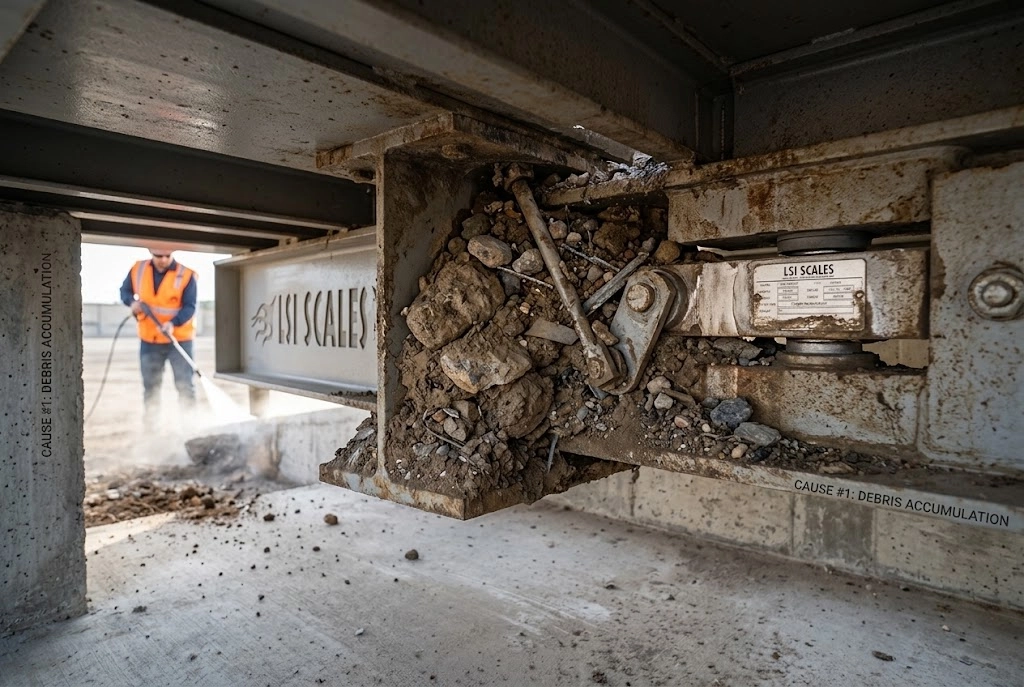
This is the single most common problem I see, and it’s also the easiest to prevent. Dirt, mud, rocks, and other debris accumulate under the scale platform over time. When that happens, the debris acts as a physical obstruction, preventing the scale from moving freely and returning to zero.
How to spot it: Your scale won’t return to zero after a truck drives off. Readings are inconsistent he same truck weighs differently each time it crosses. You might also hear grinding or scraping noises when vehicles drive over the platform.
How to fix it: Regular cleaning is the answer. Use a pressure washer and a vacuum truck to remove debris from under the scale deck. For pit-type scales, make sure drainage systems are working properly to prevent standing water and mud buildup. A rock as small as your big toe can become wedged between the foundation and deck, causing binding and inaccurate readings.
Prevention: Schedule weekly cleaning, especially during wet or dusty seasons. A 10-minute daily visual inspection can catch debris buildup before it becomes a problem.
For a comprehensive maintenance plan, check out our preventive maintenance services.
Cause #2 – Load Cell Damage or Failure
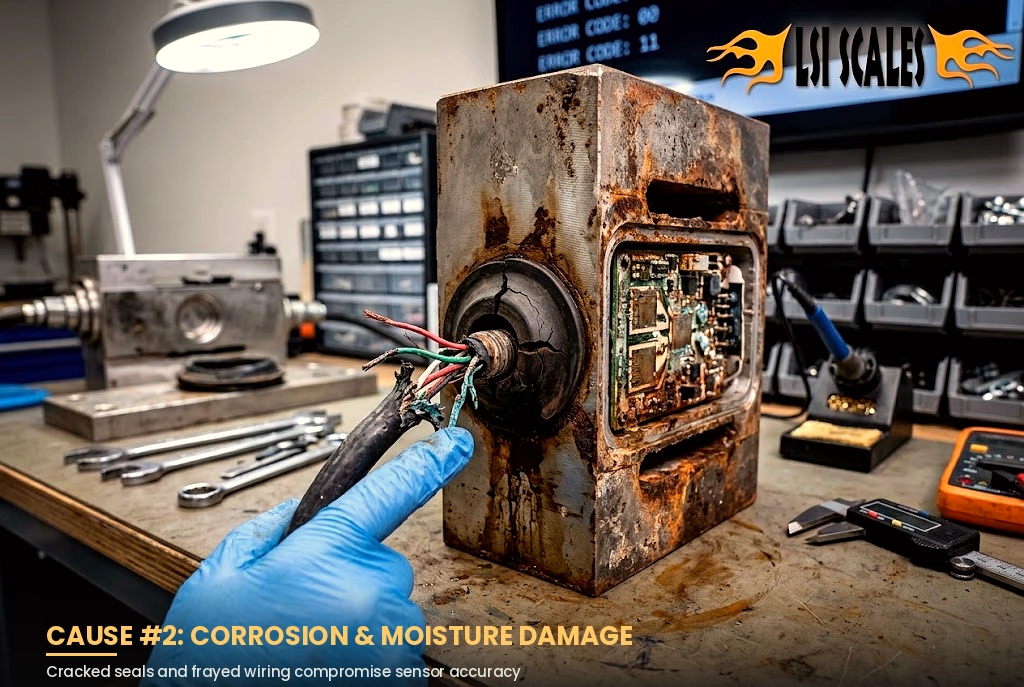
Load cells are the heart of your truck scale. These sensors convert the weight of the vehicle into an electrical signal that the indicator reads. When a load cell fails, your scale becomes unreliable—or stops working entirely.
How to spot it: One corner of the scale consistently reads differently than the others. Readings are erratic or unstable—the weight display jumps around instead of settling on a number[. You might also see error messages on the indicator related to specific load cells[. The same truck weighing differently within minutes is a classic sign of failing load cells.
Common causes of load cell failure: Overloading (shock loading) is a major culprit. Lightning strikes can fry load cell electronicsMoisture intrusion is especially harmful—when water penetrates unwelded load cells, it causes corrosion and internal damage. Rust and corrosion from environmental exposure also take their toll over time[.
How to fix it: Load cell issues require professional diagnosis and replacement. A technician can test each load cell individually to identify the faulty one. Don’t try to DIY this—improper installation can cause more damage.
Prevention: Regular mechanical checks and avoiding overloading are your best defenses. Install surge protectors to guard against lightning damage.
Our scale repair services can diagnose and fix load cell issues quickly.
Cause #3 – Calibration Drift
Every scale drifts over time. It’s not a matter of if—it’s a matter of when. Temperature changes, heavy use, normal wear and tear, and even barometric pressure can cause your scale to lose accuracy.
How to spot it: Your scale reads consistently high or low across all weights. You might notice discrepancies between your scale and other verified scales. If you’re seeing a pattern of the same error across different weights, calibration drift is likely the culprit.
Why it happens: Environmental factors like temperature cause metal components to expand and contract, affecting load cell sensitivity. A scale calibrated at 75°F won’t be accurate at 98°F[. Over time, this thermal cycling causes gradual drift. Mechanical wear from repeated heavy loading also contributes to drift[.
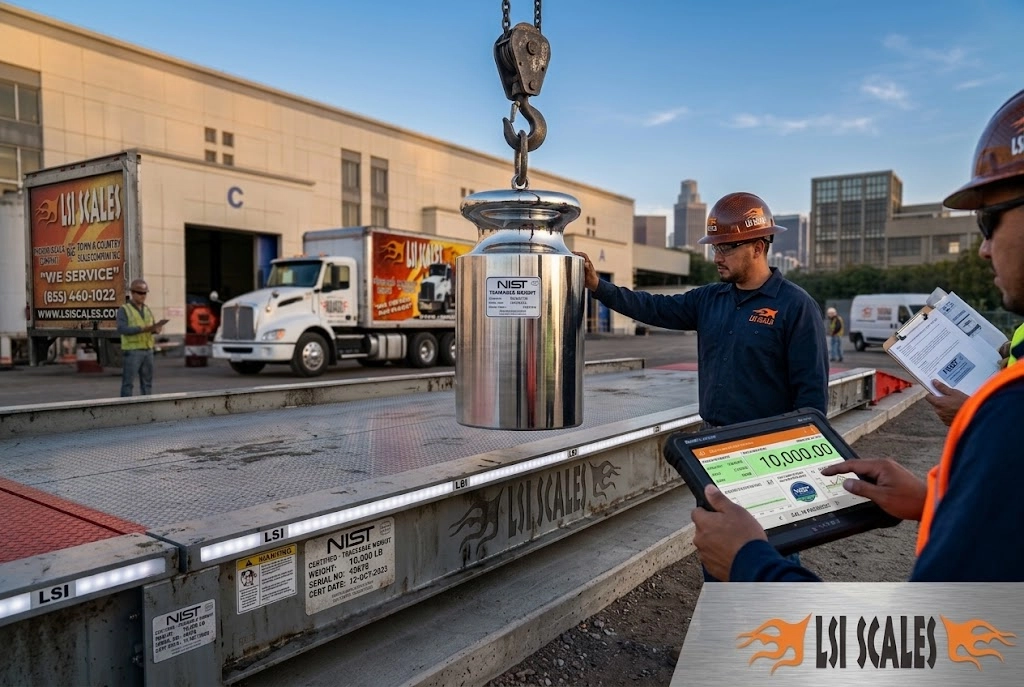
How to fix it: Professional NIST-traceable calibration is the only reliable solution. A certified technician will use certified test weights to verify accuracy and make necessary adjustments. Without routine calibration, even the best scale will eventually fail inspections and cost you money.
Prevention: Schedule calibration every 6 months as a baseline. In harsh environments—extreme heat, high humidity, or heavy usage—calibrate every 3-4 months. After any significant event like relocation or major repair, calibrate immediately.
Learn more about our NIST-traceable calibration services.
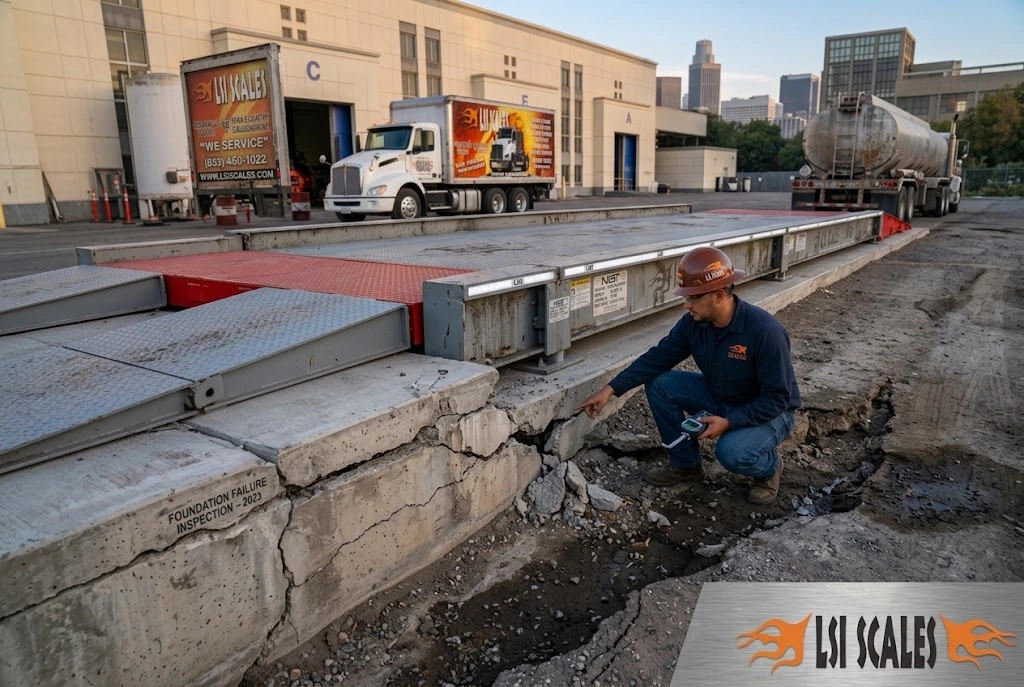
Cause #4 – Foundation or Structural Issues
Your truck scale is only as accurate as the foundation it sits on. If the foundation shifts, cracks, or settles unevenly, your scale will develop chronic calibration errors that no amount of adjustment can fix permanently.
How to spot it: Scale readings change over time without any obvious explanation. You might see physical cracks in the concrete foundation or surrounding area[. Rust or crumbling concrete weakens the scale’s structure and causes accuracy problems[. The scale might also feel uneven or wobble when trucks drive over it.
How to fix it: Foundation issues require professional assessment and repair. This might involve foundation repair, re-leveling, or in severe cases, complete replacement. A technician should inspect both mechanical and electrical conditions before making any calibration changes.
Prevention: Regular foundation inspections are essential. Check for cracks, settlement, and drainage issues. Keep the area around the scale clear of standing water that can erode the foundation.
For new installations or foundation repairs, explore our scale installation services.
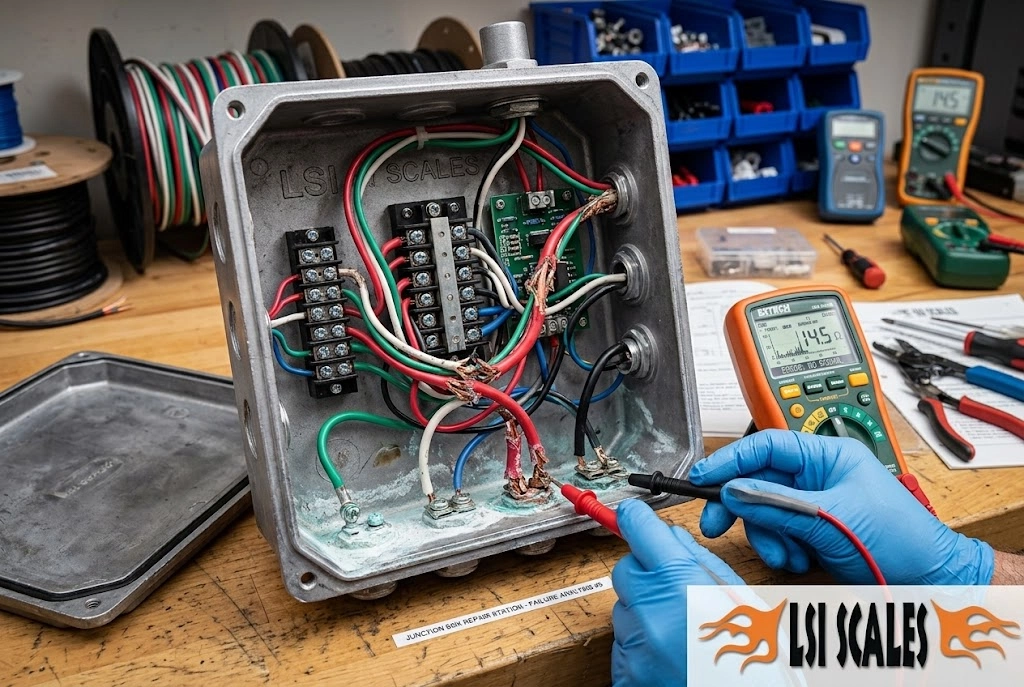
Cause #5 – Electrical or Wiring Problems
Truck scales rely on a network of cables and connections to transmit signals from the load cells to the indicator. When these cables are damaged, readings become unreliable or stop entirely.
How to spot it: Erratic readings that don’t follow any pattern. The indicator might show error messages or lose power intermittently. You might also notice that readings are slow to stabilize or that the scale randomly shuts off.
Common causes: Rodent damage is more common than you’d think—mice and rats love chewing through cables. Frayed cables from wear and tear, loose connections in the junction box, and moisture ingress all cause problems. The junction box is particularly vulnerable—it’s routinely opened for adjustments, exposing it to moisture and humidity that eventually cause errors and failures.
How to fix it: Professional wiring inspection and repair are essential. A technician can test each cable and connection to identify the fault. In many cases, replacing a damaged cable or cleaning corroded connections restores proper function.
Prevention: Regular cable checks, rodent prevention measures, and keeping junction boxes sealed and dry are key. Schedule professional inspections as part of your maintenance program.
Contact our scale repair team for electrical diagnostics and repairs.
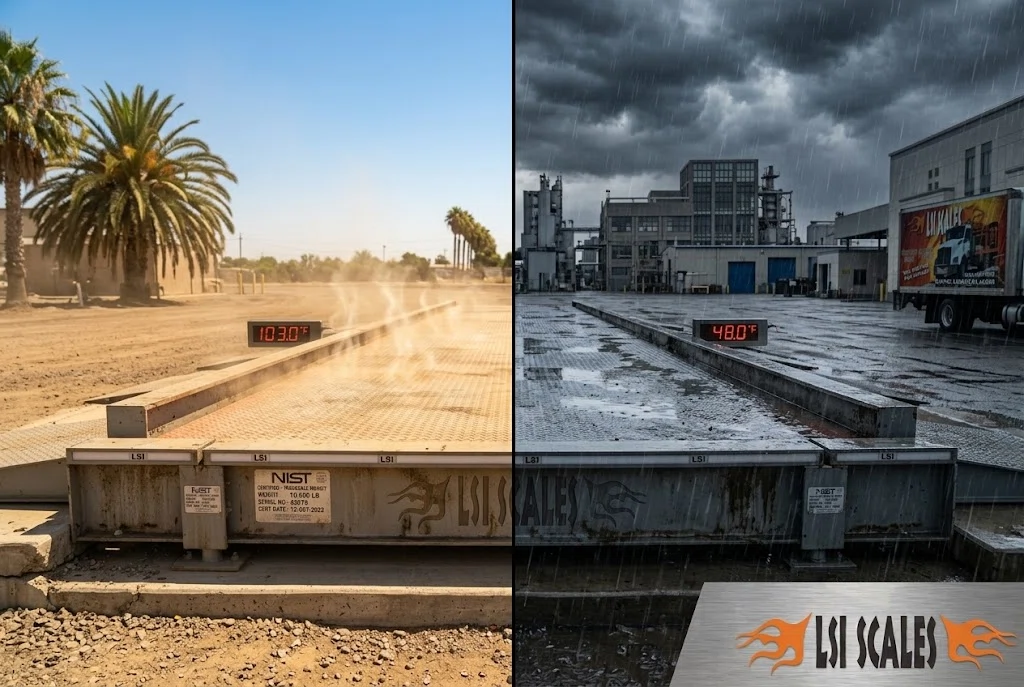
Cause #6 – Environmental Conditions
California’s diverse climate creates unique challenges for truck scales. From the extreme heat of the Central Valley to the coastal moisture and inland dust, environmental factors are a constant threat to accuracy.
Temperature: Heat causes metal expansion. In the Central Valley, summer temperatures regularly exceed 100°F. A 20°F temperature swing can cause a 0.1-0.3% drift in your readings. Cold temperatures cause contraction. Either way, your scale’s accuracy suffers.
Moisture and Rain: Moisture is the #1 enemy of electronic scales. Rain can corrode metal parts, short-circuit electrical components, and cause erratic readings. Moisture ingress is especially harmful to load cells.
Dust and Debris: Dry conditions mean dust and debris accumulate under the scale platform. California’s inland and desert areas are particularly prone to this problem.
Lightning: A lightning strike near your scale can fry load cells, indicators, and junction boxes in an instant.
How to spot it: Seasonal patterns to errors—problems that appear in summer or after rainstorms are environmental. Issues that coincide with weather events are a dead giveaway.
How to fix it: Weatherproofing is essential. Install surge protectors for lightning protection. Ensure proper drainage around the scale. Use environmental shields and covers where possible. Schedule seasonal calibration—calibrate in early morning during summer to avoid the worst heat.
Prevention: Regular maintenance and seasonal calibration are your best defenses. Our preventive maintenance programs can help you stay ahead of environmental issues.
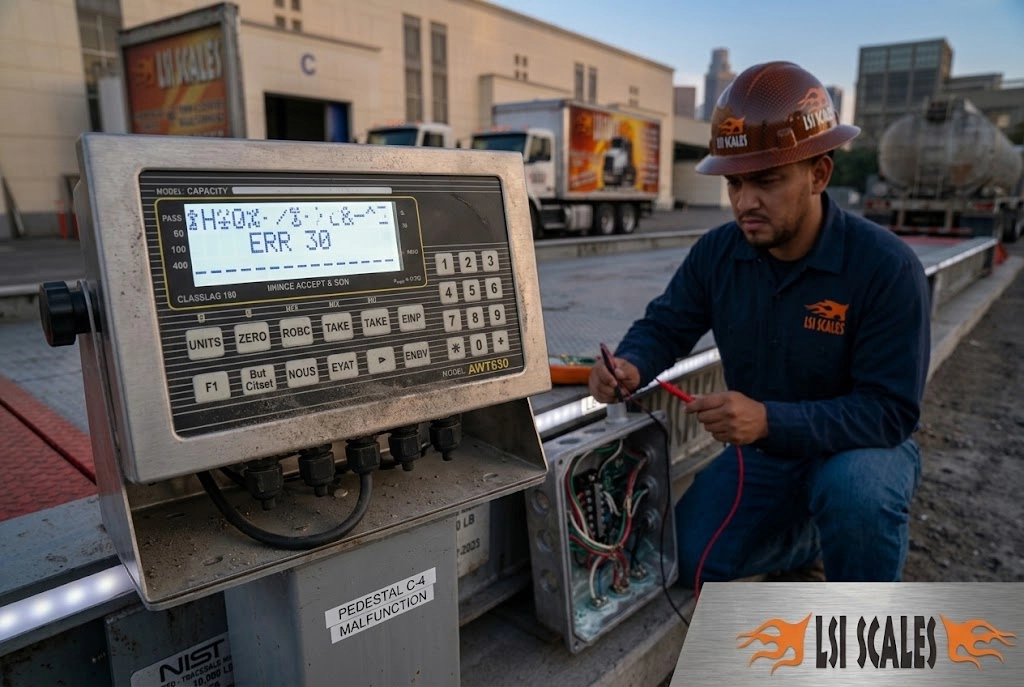
Cause #7 – Indicator or Junction Box Malfunction
The indicator is what you see—the display that shows the weight. The junction box is what you don’t see—the connection point where all the load cell signals come together. Both are critical components, and both can fail.
How to spot it: Display errors, no power, or inconsistent readings that don’t match any other pattern. The indicator might show error messages or freeze. You might also notice that the scale powers off randomly.
Common causes: Moisture ingress is the primary culprit—junction boxes are routinely opened, exposing them to humidity. Electrical surges, component aging, and physical damage also cause failures.
How to fix it: Professional diagnosis and replacement are required. A technician can test the indicator and junction box to determine if they’re functioning properly. In many cases, replacing a faulty junction box or indicator restores full functionality.
Prevention: Regular system checks, keeping junction boxes sealed, and ensuring proper electrical protection are essential.
Our scale repair services cover indicators, junction boxes, and all electronic components.
The 10-Minute Daily Inspection That Can Save You Thousands
Here’s something I tell every client: a 10-minute basic inspection before daily operations can reduce the probability of sudden failures by more than 40%. Here’s what that inspection should include:
Daily Checklist:
- Check for debris under the scale. A quick visual inspection can catch rocks, mud, or other obstructions before they cause binding.
- Ensure scale returns to zero between weighs. The digital display should always read zero before any vehicle drives onto the platform.
- Listen for unusual noises. Grinding, scraping, or other abnormal sounds indicate mechanical issues.
- Check cables for damage. Look for frayed cables, loose connections, or signs of rodent damage
- Inspect the platform. Look for cracks in steel plating or concrete, rust, and other signs of wear.
- Verify that all vehicles approach slowly. Sudden braking or fast approaches can cause shock loading and damage load cells.
For pit-type scales, confirm that drainage systems are working properly. Standing water can lead to corrosion and electrical issues.
This simple routine takes minutes but can save you thousands in repairs, fines, and lost product.
Download our full preventive maintenance checklist for a complete guide.
When to Call a Professional
Not every scale problem requires a professional. Debris buildup, daily inspections, and basic cleaning are well within the capabilities of most operators. But there are lines you shouldn’t cross:
Don’t DIY electrical repairs. Truck scales operate on sensitive electronics. Improper repairs can cause more damage, create safety hazards, and void warranties.
Don’t ignore calibration drift. If you suspect your scale is drifting, call a professional. A NIST-traceable calibration is the only way to ensure accuracy and legal compliance.
Call us for: Load cell replacement, professional calibration, foundation issues, electrical problems, indicator or junction box replacement, and any issue you can’t diagnose yourself.
If your scale is showing error messages, erratic readings, or any of the symptoms we’ve covered, don’t wait. Contact us today for a professional diagnosis.
Case Study – “How a 0.5% Error Cost One Mining Company $50,000”
Illustrative Industry Scenario
I worked with a mining operation in California that had been using the same truck scale for years. They were a busy operation—100+ trucks a day, 300+ days a year. And they’d been relying on the same calibration for over two years.
The Problem: Their scale had drifted by 0.5% without anyone noticing. The drift was gradual—slow enough that it went undetected. But over time, the cumulative effect was devastating.
The Cost: At 0.5% error on a 40,000-pound truck, they were giving away 200 pounds of product per load. At 100 trucks a day, that’s 20,000 pounds of product given away daily. Over a year, that added up to over 7 million pounds—worth more than $50,000.
The Solution: We performed a full NIST-traceable calibration, identified the drift, and corrected it. We also set them up with a regular calibration schedule—every 6 months instead of every 2 years.
The Result: They stopped the product giveaway immediately. The calibration paid for itself in less than a month. And they haven’t had a calibration-related issue since.
The Lesson: Don’t wait until you notice a problem. By the time you see the drift, you’ve already lost money. Regular calibration is an investment—not an expense.
Frequently Asked Questions
How Often Should I Calibrate My Truck Scale?
At minimum, every 6 months. In harsh environments—extreme heat, high humidity, heavy usage every 3-4 months. After any significant event like relocation or major repair, calibrate immediately.
Can weather affect my truck scale accuracy?
Absolutely. Temperature changes cause metal expansion and contraction. Moisture causes corrosion and short circuits. Dust and debris cause mechanical binding. Seasonal calibration is essential in California’s diverse climate.
How do I know if my load cell is bad?
One corner of the scale reads differently than the others. Readings are erratic or unstable. You see error messages on the indicator. The same truck weighs differently within minutes.
What’s the most common cause of truck scale failure?
Debris buildup is the most common and easiest to prevent. Junction box failures and load cell damage from moisture and overloading are also frequent causes.
What does “legal for trade” mean in California?
In California, commercially used scales must be legal for trade. This means they must have a Certificate of Approval from the California Type Evaluation Program (CTEP) or a Certificate of Conformance from NTEP. Scales must also be annually registered with the County Department of Weights and Measures.
How accurate should my truck scale be?
For legal-for-trade applications, your scale must meet NIST Handbook 44 specifications. California requires fixed scales to be accurate within two-tenths of a percent. Portable scales must be accurate within 2% of true weight.
For more answers and insights, visit our blog.
Don’t Wait Until It’s Too Late
Your scale is costing you money right now. Every inaccurate reading is either product you’re giving away or customers you’re overcharging. Every day you delay calibration or repair is another day of lost profit.
What you can do right now:
- Perform a 10-minute daily inspection starting tomorrow
- Schedule a professional calibration if you haven’t had one in the last 6 months
- If you’re seeing any of the symptoms we’ve covered, call a professional today
Don’t wait until your scale fails an inspection. Don’t wait until a customer disputes a weight. Don’t wait until the fines start piling up.
Contact us today for a professional diagnosis or schedule a repair with our certified technicians.
We’re available 24/7, 365 days a year.