A failed weights and measures inspection rarely happens because a business owner did something wrong on purpose. It usually happens because nobody was quite sure which certification rules actually applied to their scale in the first place. “NTEP certified,” “legal for trade,” and “CT-109” all get used loosely, and that confusion is exactly what gets businesses in California, Arizona, and Nevada flagged during an audit. Here’s a plain-English breakdown of what each term actually means, who enforces it, and how to make sure your scale is covered.
1. What “NTEP Certified” Actually Means
NTEP stands for the National Type Evaluation Program, run by the National Conference on Weights and Measures (NCWM). NTEP certification is not something that happens at your facility — it’s a one-time evaluation of a scale model, conducted by the manufacturer, that confirms the design itself meets national accuracy and construction standards. A “Certificate of Conformance” (CoC) is issued for that model.
In other words, NTEP certification tells you the scale was built to the right standard. It does not tell you that the specific unit sitting on your facility floor right now is still accurate. That’s a separate, ongoing requirement, which is where the next section comes in.
2. Legal-for-Trade vs. Internal-Use Scales — Which Rules Apply to You?
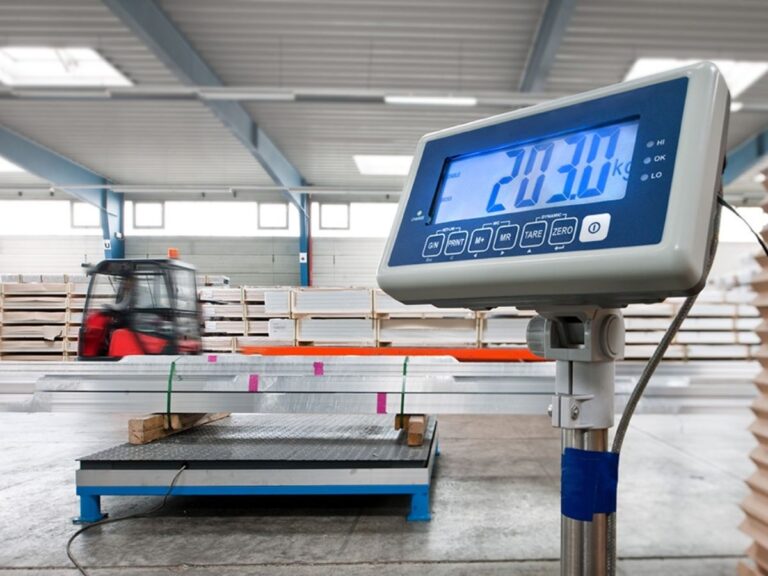
Not every scale needs to be certified. The deciding factor is simple: is the weight reading used to determine a price, fee, or quantity in a commercial transaction? If you’re invoicing a customer by weight, paying a supplier based on a delivered load, or charging a disposal fee at a scale house, that scale is considered “legal for trade” and must be an NTEP-certified model that is also field-verified by your state’s weights and measures authority.
If a scale is used purely for internal quality control, portion consistency, or process monitoring, and never determines a transaction amount, it generally doesn’t carry the same legal certification requirement, though accuracy still matters for your own quality standards. Our team can help you determine which category each of your scales falls into during a service visit.
3. Who Enforces Scale Certification in California, Arizona & Nevada
Each state we serve has its own weights and measures authority responsible for field inspections, sealing, and enforcement:
- California: The CDFA Division of Measurement Standards, working with county Weights and Measures offices, enforces legal-for-trade requirements for businesses across the state, including California and Los Angeles.
- Arizona: The Arizona Department of Weights and Measures inspects and seals commercial devices, a requirement we help businesses across Arizona stay ahead of.
- Nevada: Weights and measures enforcement falls under the Nevada Department of Agriculture, covering commercial scales throughout the state, including the businesses we support in Nevada.
While the agency names differ, the underlying standard each one inspects against is the same: NIST Handbook 44, which sets the tolerances every legal-for-trade scale must meet.
4. How Often Does a Commercial Scale Need to Be Re-Verified?
This is the question we hear the most, and the honest answer is: it depends on your local jurisdiction and your industry, but annual verification is the most common standard for legal-for-trade devices. Some counties and some high-volume industries (grain, livestock, recycling) require more frequent checks. A scale that sees heavy daily use, sits outdoors, or handles corrosive materials will also drift out of tolerance faster than a lightly used indoor unit, regardless of what the calendar says.
The safest approach is to pair your legally required inspection with a preventive maintenance schedule built around your actual usage, rather than waiting for the minimum required interval to come around.
5. What Happens If Your Scale Fails a Weights and Measures Inspection
If an inspector finds your scale outside its tolerance, it typically gets “rejected” and sealed to prevent further use in commercial transactions until it’s repaired and re-verified. Depending on the jurisdiction and how far out of tolerance the device was, this can come with a citation or fine, and in more serious cases, a review of past transactions if there’s reason to believe customers were shorted or overcharged.
The fastest path back to compliant operation is having a registered service agency diagnose and correct the issue, then re-certify the device before the inspector returns. Acting quickly here matters far more than the size of the fine itself, since every day the scale is sealed is a day it can’t be used for billable transactions.
6. A Special Case: California Test 109 (CT-109) for Batch Plants & Hoppers
One term worth clarifying directly: California Test 109, or “CT-109,” is a specific Caltrans materials-testing method used to test and calibrate batch-plant, hopper, and witness scales at concrete and asphalt production plants working on Caltrans construction projects. It’s a real and important standard, but it’s a narrower, California-specific requirement, not a general substitute for NTEP or legal-for-trade certification, and it doesn’t apply outside California batch-plant contexts.
If your operation includes a batch plant or hopper scale supplying a Caltrans project, this is a standard we test against directly as part of our CT-109 Certification service. If your scale is used for general commercial transactions outside that specific context, NTEP and your state weights and measures requirements are the standards that actually apply to you.
7. How LSI Scales Keeps You Compliant
We’ve spent more than 50 years helping businesses across California, Arizona, and Nevada navigate exactly these requirements. Our technicians identify which of your devices are legal-for-trade, verify them against NIST-traceable standards, and provide the documentation you need to satisfy an inspector on the spot. Where a scale needs more than calibration, we handle repair, installation, and full certification services under one roof, so you’re not coordinating between three different vendors to stay compliant.
Frequently Asked Questions
Is an NTEP-certified scale automatically legal for trade?
Not by itself. NTEP certification confirms the scale model meets national design standards, but the individual unit also needs to be field-verified and sealed by your state’s weights and measures authority before it’s legally usable for commercial transactions.
How do I find out if my state requires annual or more frequent inspection?
Requirements vary by county and industry, so the most reliable way to confirm your schedule is to ask a registered service agency familiar with your local jurisdiction, rather than assuming a single statewide rule applies everywhere.
What’s the difference between NTEP and CT-109?
NTEP is a national, model-level certification used to determine legal-for-trade eligibility across the U.S. CT-109 is a California-only Caltrans test method specific to batch-plant and hopper scale calibration on construction materials projects. They serve different purposes and aren’t interchangeable.
Can I use my scale while waiting for re-certification?
If your scale has been rejected and sealed following a failed inspection, it generally cannot be used for billable transactions until it’s repaired and re-verified, regardless of how urgently you need it.
Protect Your Compliance Today
Certification confusion is an easy problem to fix before it becomes a fine. Whether you need to confirm which of your scales are legal-for-trade, schedule a re-verification, or get ahead of an upcoming inspection, our team can walk you through exactly what applies to your operation.
Ready to confirm your compliance status? Visit our contact us page or reach out directly to our experts.
LSI Scales Contact Information:
Operating Hours: Monday–Friday, 8:00 AM – 4:30 PM
Fresno, CA: (559) 446-1022
Wittmann, AZ: (855) 440-1022
Email: lsiscales@lsiscales.com