If you run a warehouse, distribution center, or any operation that moves pallets regularly, a forklift scale can change how your whole workflow runs. Instead of routing every load through a separate floor scale, you get the weight right at the point of movement — no extra steps, no bottlenecks, no wasted trips. But buying the wrong forklift scale, or skipping the right installation steps, creates problems that outlast the purchase price. This guide covers what actually matters before you spend a dollar.
How Does a Forklift Scale Work?
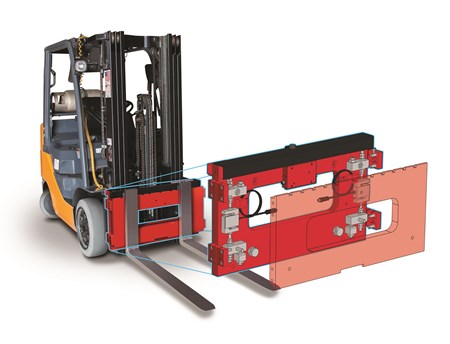
A forklift scale measures load weight using sensors built into the forklift’s carriage — the attachment plate that connects the forks to the mast. Most systems use load cells, which are precision sensors that convert mechanical force (the weight pressing down from the load) into an electronic signal. That signal feeds into a display unit mounted in the cab, giving the operator a real-time weight reading without stopping at a separate station.
There are two main technology types you’ll encounter. Hydraulic forklift scales measure the pressure increase in the lift cylinder as the load is raised. Load cell carriage scales use sensors integrated directly into the carriage assembly. Load cell systems generally deliver higher accuracy and are the standard choice for legal-for-trade applications. Hydraulic systems can be easier to retrofit onto existing equipment but tend to have less precision when accuracy really counts.
The ITA carriage class also matters — more on that below. Carriage classes are defined by the Industrial Truck Association and determine the physical dimensions and capacity range of your forklift’s carriage. Any forklift scale you buy must match your carriage class exactly. This isn’t a preference — it’s a safety and compatibility requirement.
Forklift Scale vs Floor Scale: Which Do You Actually Need?
These two scale types solve the same problem from different angles. Here’s a straightforward side-by-side comparison:
| Forklift Scale | Floor Scale | |
|---|---|---|
| Where weight is captured | At the lift point — while moving | At a fixed weigh station |
| Workflow interruption | None | Load must be set down |
| Typical accuracy | 0.1% – 0.5% of capacity | 0.02% – 0.1% of capacity |
| Legal-for-trade option | Yes (NTEP-certified models) | Yes (NTEP-certified models) |
| Best for | High-volume throughput, large facilities | Precision batching, check-weighing |
| Installation | Certified carriage installation required | Fixed floor mount installation |
Both have a place depending on your operation. If you have a single weigh station and your loads route through it without friction, a floor scale handles the job well. But if you’re weighing dozens of loads per shift across a large facility, a forklift scale saves real time — and eliminates the handling risk that comes from setting loads down just to capture a weight.
Some facilities run both. Floor scales for stationary batching and check-weighing, forklift scales for outbound shipments and receiving. The right answer depends on your process, not on which type sounds more advanced.
5 Things to Check Before Buying a Forklift Scale
Not all forklift scales are built the same, and compatibility issues discovered after purchase are expensive to fix. Run through these five checkpoints before you commit to anything.
1. ITA Carriage Class Compatibility
The scale’s carriage class must match your forklift. Installing a Class II scale on a Class III carriage isn’t a workaround — it’s a failure waiting to happen. Pull the spec sheet for your forklift, confirm the ITA class, and verify the scale you’re considering is rated for it. Your dealer or a certified scale technician can confirm this before any money changes hands.
2. Weight Capacity
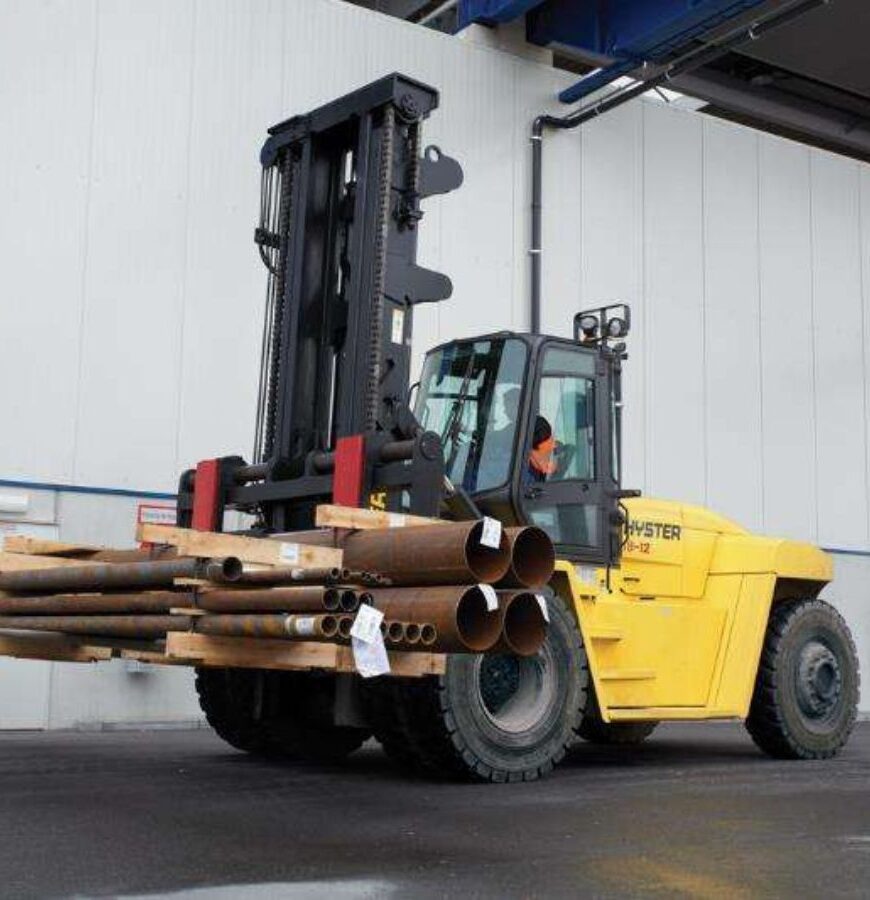
Your scale needs to handle your maximum load, not your average one. If you occasionally move 5,000 lb pallets, a scale rated to 4,000 lb is already wrong. Build in a margin of at least 15–20% above your heaviest typical load. Overloading a scale doesn’t just give you bad readings — it damages the load cells and voids the calibration.
3. Accuracy and Display Resolution
Accuracy is the gap between the reading and the true weight. Resolution is the smallest increment the display can show — for example, 0.5 lb, 1 lb, or 2 lb increments. If you’re billing customers by weight or verifying shipment weights against a contract, both numbers have direct financial consequences. Ask for the accuracy specification as a percentage of full capacity. Anything above 0.5% starts to become a problem for commercial applications.
4. Display and Software Integration
Where does the weight reading actually go? Some systems display only in the cab. Others connect wirelessly to warehouse management systems, print weight tickets automatically, or log data in real time. Know your data workflow before you choose a display unit. Retrofitting connectivity after installation is almost always more expensive than specifying it upfront.
5. Environmental Rating
Warehouse conditions vary significantly. Cold storage, outdoor yards, and facilities handling wet or chemical loads all put different demands on electronics. Check the IP (Ingress Protection) rating of both the display unit and the load cells. A unit rated IP65 handles dust and direct water jets. A standard indoor-rated unit will fail in those same conditions — usually at the worst possible moment.
What Is a Legal-for-Trade Forklift Scale?
If you’re using your scale for commercial transactions — billing customers by weight, verifying shipment weights for invoicing, or meeting regulatory reporting requirements — you need a legal-for-trade scale. This is not a feature you can add later. It’s a certification status the scale either has or doesn’t have when it’s installed and verified.
In the United States, legal-for-trade scales must be certified under NTEP (National Type Evaluation Program), which confirms the scale meets the accuracy standards defined in NIST Handbook 44. But NTEP certification on the product itself is only part of the requirement. The scale also needs to be installed, verified, and sealed by a licensed Weights & Measures technician before it’s legally usable for commercial transactions.
In California and Arizona, this process is overseen by the state Weights & Measures departments. A scale that hasn’t been properly set up and certified by a licensed technician — regardless of what the manufacturer’s label says — is not legal for commercial use in those states, full stop.
This is where most buying guides fall short. They’ll explain what NTEP means in a footnote. What they won’t tell you is that the installation process and the calibration verification are just as important as the product’s certification status. Certified scale services and NIST-traceable calibration from a licensed provider are what complete the legal-for-trade picture — buying an NTEP-labeled product is only step one.
Forklift Scale Installation: What Certified Service Actually Involves
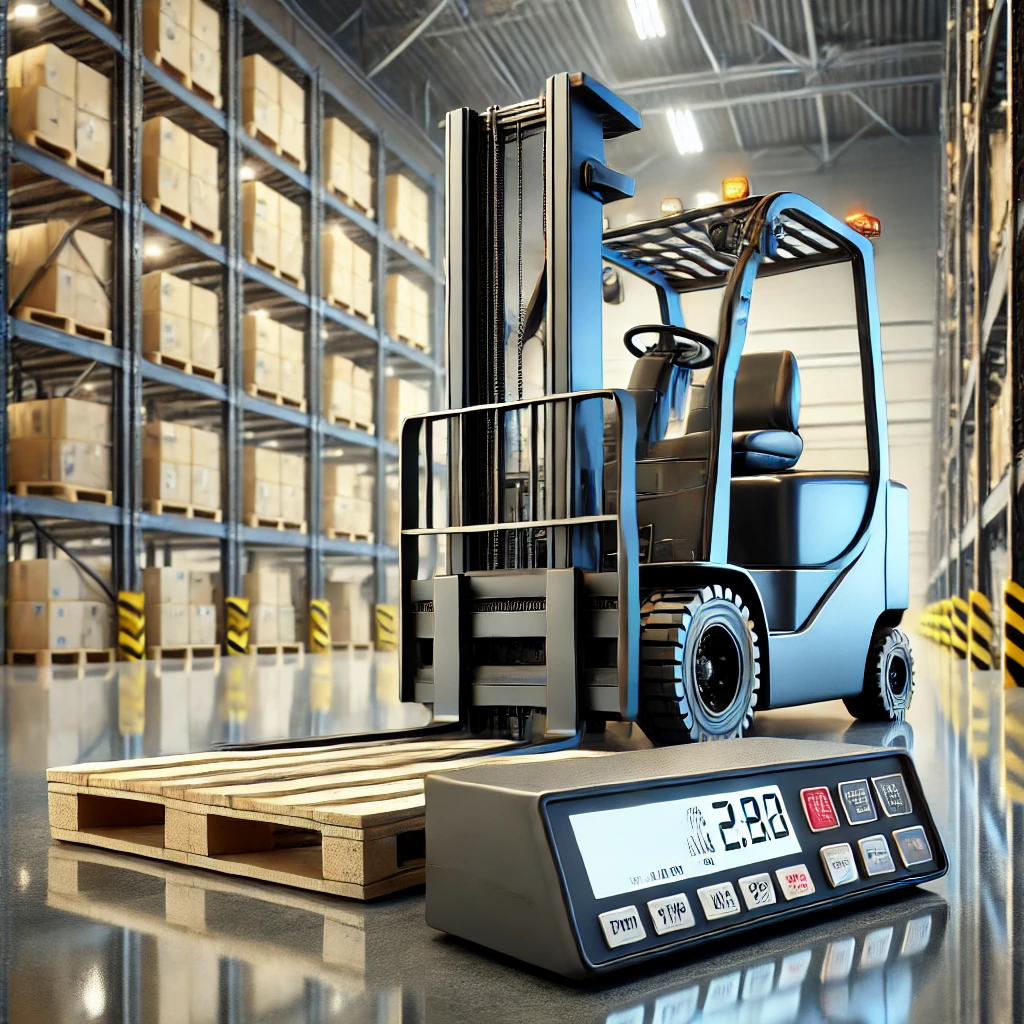
Installing a forklift scale is not the same as mounting a bracket on a wall. A proper installation done by a certified technician includes removing the existing carriage or integrating the scale carriage onto the mast assembly, running and securing all wiring to the display unit, balancing and zeroing the load cells, and performing a series of test loads across the full capacity range to verify that accuracy holds at every point — not just at the midpoint.
For legal-for-trade use, the calibration is then sealed, and the installation is documented for Weights & Measures compliance. If any step in that process is skipped or handled by someone without the right credentials, your scale may read correctly under easy conditions and drift under real load — exactly when you need it to be right.
A proper scale installation also sets you up for what comes after. You need to know the calibration schedule, what signs of drift look like in normal operation, and when the unit needs preventive maintenance before it turns into a repair situation. That conversation happens at installation — not months later when something is already wrong.
LSI Scales installs, calibrates, and services forklift scales across California, Arizona, Oregon, and Washington. Every installation is performed by certified technicians and documented to meet state compliance requirements. You can explore our forklift scale services or contact our team to discuss your facility’s specific requirements before you buy anything.
FAQ: Forklift Scale Questions Answered
Can a Forklift Scale Replace a Floor Scale Entirely?
For most operations, no. Forklift scales are built for dynamic, point-of-lift weighing and handle high-throughput environments extremely well. Floor scales remain the better choice for precision batching, check-weighing, or static measurements where maximum accuracy is the priority. Many facilities use both for different parts of their operation.
How Accurate Are Forklift Scales?
A quality load cell carriage scale typically achieves accuracy within 0.1% to 0.5% of full capacity. Hydraulic systems are generally less precise, usually in the 0.5% to 1% range. For legal-for-trade use, the scale must meet the specific division values defined in NIST Handbook 44, which your calibration technician will verify at installation.
Do I Need to Recalibrate After a Repair?
Yes. Any time a load cell, display unit, or carriage component is replaced or significantly adjusted, the scale must be re-verified and re-sealed before it can be used for legal-for-trade purposes. This applies in California, Arizona, and most other U.S. states. Skipping this step after a repair is one of the most common compliance mistakes facilities make.
What Does Ita Carriage Class Mean?
ITA stands for Industrial Truck Association. Carriage classes I through IV define the physical dimensions and load capacity range of the carriage assembly on your forklift. A scale designed for one class won’t fit another, and attempting to force compatibility creates both safety risks and inaccurate readings. Always confirm your carriage class before selecting a scale.
WHO Installs and Certifies Forklift Scales in California and Arizona?
LSI Scales provides certified forklift scale installation, verification, and calibration services across the West Coast. You can view our service locations or contact us directly to discuss your facility’s requirements and get a quote before you commit to a purchase.