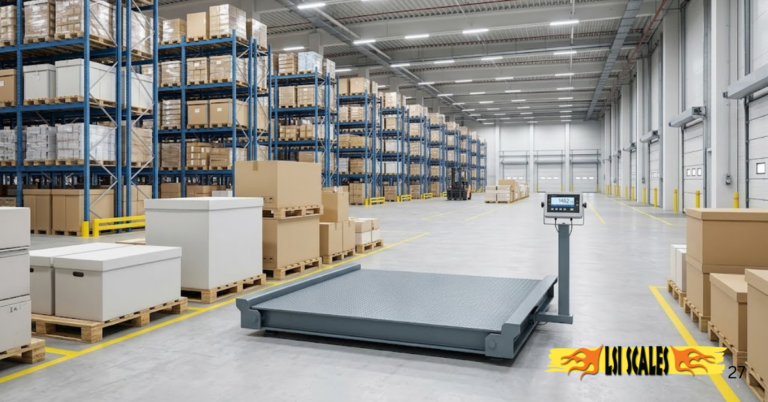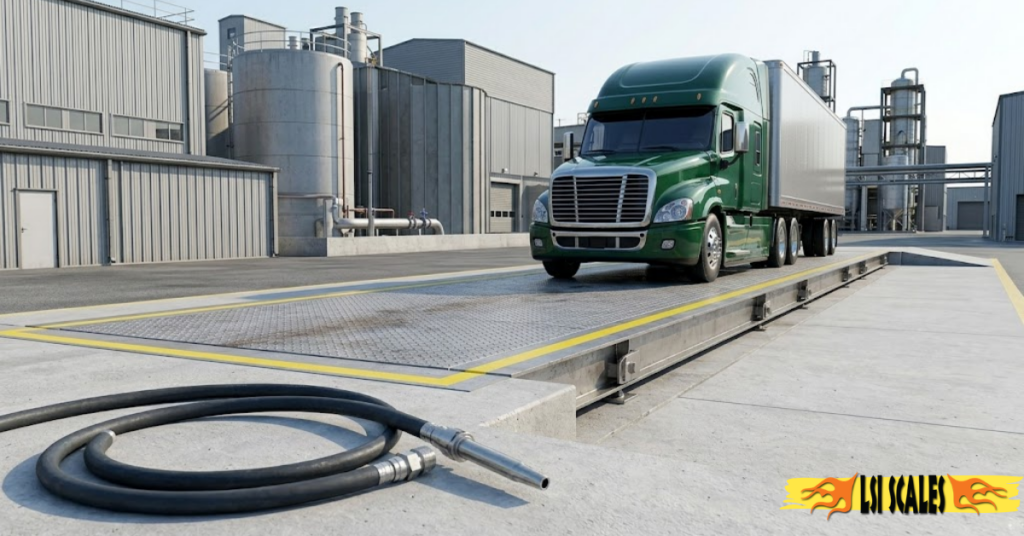
It’s a question we hear regularly — from new operations just getting started, from established businesses opening a second site, and from facility managers whose scale just went down at the worst possible time. Should you rent a truck scale or buy one?
Anyone who gives you a quick, blanket answer probably has a reason for steering you one way. The honest truth is that it depends entirely on your operation — the frequency of use, the duration of need, your compliance obligations, and your cash flow situation all factor in.
We’ve been helping businesses across California, Arizona, Oregon, and Washington work through this decision for over 50 years. We offer both equipment scale rentals and permanent scale sales and installation — which means we don’t have a financial reason to push you in either direction. What follows is a straightforward breakdown of both options so you can make the right call for your specific situation.
First: Know What Type of Truck Scale You Actually Need
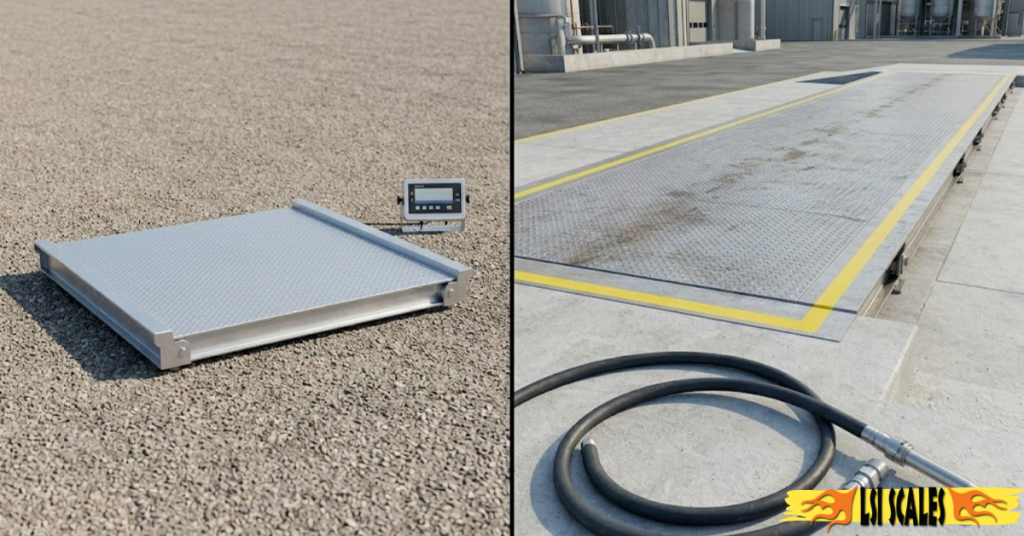
Before the rental vs. purchase question even matters, you need clarity on the type of truck scale your operation requires. The scale type shapes the cost, the setup time, the compliance requirements, and how practical each option is.
There are three main types relevant to most operations:
- Full-deck truck scales — a permanent or semi-permanent weighbridge that measures the entire vehicle in a single pass. These are typically steel or concrete deck construction, high capacity, and designed for fixed sites with consistent daily traffic. They require a proper foundation and installation. These are our standard truck scales — the workhorse of permanent weighing operations.
- Portable axle scales — drive-over pads that measure axle weights individually. Lightweight, no permanent foundation required, and fast to set up. Well-suited for temporary sites, remote locations, and DOT compliance checks. Our axle scales cover these applications.
- Wheel weighers — the most portable option of the three. Individual pads placed under each wheel for quick gross vehicle weight checks. Ideal for roadside, spot-check, or highly mobile operations where speed of setup matters most.
Generally speaking: portable axle scales and wheel weighers are the most common rental options because they don’t require permanent site preparation. Full-deck truck scales can be rented on a temporary basis as well — a number of portable full-deck units exist specifically for this — but they still require site prep and are better suited to rentals of several months or longer.
The Real Cost Difference: Rental vs. Ownership Over Time
This is where most people start — and where most competing guides give you vague generalities instead of a useful framework. Here’s how to actually think through the numbers.
Rental cost structure: You pay a monthly rate that covers the equipment itself. Delivery, setup, calibration, and maintenance are typically the rental provider’s responsibility. There’s no capital outlay, no depreciation on your books, and no surprise repair costs. When the rental period ends, the scale goes back. Cash flow stays relatively predictable.
Purchase cost structure: The upfront equipment cost is the most visible number, but it’s not the whole picture. For a permanent full-deck truck scale, you also need to account for site preparation and foundation work, professional scale installation, regular calibration, a preventive maintenance program, and eventual repair or overhaul costs over the asset’s life. When you add all of that up over five to ten years, the total cost of ownership is considerably higher than the purchase price alone.
The break-even math usually works like this: if you have a continuous, permanent weighing need, purchasing almost always wins financially after a certain period. If your need is seasonal, project-based, or uncertain, renting is typically the smarter use of capital — you avoid tying up funds in an asset that isn’t earning you anything during idle periods.
When Renting a Truck Scale Makes More Sense
Renting isn’t just for businesses that can’t afford to buy. There are operational scenarios where renting is objectively the better decision, regardless of budget.
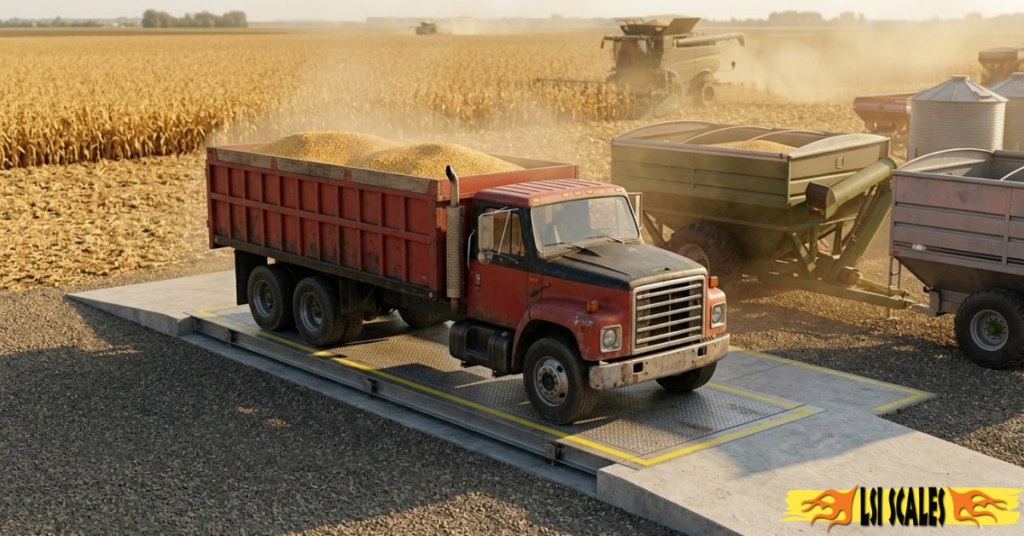
Seasonal demand spikes. Agriculture is the clearest example. Harvest season brings a concentrated, high-volume need for truck weighing — grain, produce, livestock transport — that doesn’t exist at the same level the rest of the year. Owning a full-capacity truck scale that sits largely idle for eight months is a poor use of capital. Renting for the season is a straightforward financial win. Our agricultural farm scale customers across California’s Central Valley and Arizona use this approach regularly.
Short-term and project-based operations. Road construction, mining projects, demolition, and temporary waste processing sites all have defined timelines. The project ends — the scale goes back. There’s no residual asset to store, sell, or maintain. For mining operations or transportation and logistics projects working on temporary sites, rental is almost always the right call.
Scale downtime and emergency backup. Your primary truck scale goes down for repair or a full scale overhaul. Operations can’t stop. A rental bridges the gap and keeps things moving while the primary unit is being serviced. This is one of the most common reasons businesses call us for a rental — it’s not planned, but it’s one of the most operationally critical uses of a temporary scale. If you’re in this situation, our scale repair team and rental fleet work together to minimize your downtime.
Capacity top-up for a temporary spike. Your existing scale handles your normal volume fine. But you’ve landed a short-term contract, or waste management volume is up temporarily, and you need more throughput for a defined period. Renting a second unit for that window is far more sensible than purchasing additional capacity you’ll rarely use at full utilization.
Testing before committing to purchase. If you’re evaluating a scale type or capacity before making a permanent investment, a rental period lets you verify that the spec you’ve chosen actually fits your workflow — before you’re locked in.
One Thing to Know About Renting: You’re Still Responsible for the Scale
This doesn’t appear in most rental guides, but it’s worth knowing before you sign an agreement. While calibration and maintenance are typically the rental provider’s responsibility, physical damage to the unit during the rental period is usually on the renter. Make sure your site is suitable — stable, level ground, adequate approach clearance for the vehicles being weighed, and no overhead or environmental hazards that could damage the equipment. Read the rental agreement carefully before equipment arrives.
When Buying a Truck Scale Makes More Sense
For operations with a permanent, high-frequency weighing need, ownership is almost always the better long-term financial and operational choice.
Daily, continuous use at a permanent facility. If trucks are rolling across your scale every working day — at a waste transfer station, a quarry, a grain elevator, a logistics hub — the cumulative cost of rental quickly exceeds the cost of ownership. A purchased, permanently installed scale that’s properly maintained will serve an operation for decades. Our scrap and recycling customers are a good example: high daily volume, permanent site, and a clear operational dependency on the scale functioning reliably every day.
Legal-for-trade commercial operations. If your business buys or sells by weight — and that transaction is the basis for invoicing — you need a permanently installed, certified scale that meets the full compliance chain for your jurisdiction. This brings us to the compliance question, which is one of the most overlooked aspects of this decision.
Operational control and service flexibility. When you own the scale, you choose the calibration schedule, the service provider, and the maintenance program. You’re not dependent on a rental provider’s availability or response time. For operations where scale uptime is mission-critical, that control matters. Our certified scales and ongoing service programs are built around exactly this kind of long-term ownership relationship.
Compliance Doesn’t Change Based on Whether You Rent or Own
This is the section that most rental-focused guides skip entirely — and it’s one of the most important considerations for any West Coast operation using a truck scale for commercial purposes.
Whether you rent or purchase a truck scale, if it’s being used in commerce — meaning weight is the basis for a financial transaction — it must meet the technical requirements of NIST Handbook 44 and carry current calibration certification. The equipment being rented doesn’t exempt you from this requirement.
In California specifically, scales used in commercial transactions must be inspected and approved by the county Weights & Measures department. This applies whether the scale is owned or rented. CT-109 certification — California’s scale certification standard — applies to the scale as deployed at your site, not just to the equipment in isolation.
In Arizona, Oregon, and Washington, state weights and measures regulations similarly govern commercial weighing regardless of ownership structure.
The practical implication: when renting a truck scale for commercial use, always confirm with your rental provider that the unit comes with current calibration documentation, and verify that it meets the certification requirements for the county and state you’re operating in. Our weight calibration services and rental units are maintained to meet these standards — but it’s worth asking any rental provider for documentation before the scale goes live.
Industries That Most Commonly Use Truck Scale Rentals on the West Coast
While the rental vs. purchase decision applies across industries, certain sectors lean heavily toward rental for structural operational reasons.
Agriculture — California and Arizona farming operations use truck scale rentals most heavily during harvest. Grain, produce, and livestock transport all create concentrated seasonal demand for certified truck weighing. Our agricultural farm scale rentals serve operations across the Central Valley and the Southwest.
Waste management and recycling — Variable load volumes, rotating site locations, and temporary processing operations make rentals a practical fit for many waste management and scrap and recycling operations. When a site is active, the scale is there. When it wraps, it doesn’t need to be stored or managed.
Transportation and logistics — DOT weight compliance checks, freight billing verification, and temporary distribution hub operations all generate demand for short-term truck weighing. Our transportation scale customers range from freight carriers running compliance checks to logistics operators managing temporary site capacity.
Mining and construction — Project-based by nature. Mining truck scale rentals follow the project timeline — setup when the site opens, returned when it closes. No permanent asset left behind, no storage costs, no residual maintenance obligation.
The Right Answer Depends on Your Operation — Not a General Rule
There’s no universal answer to the rental vs. purchase question — and anyone telling you otherwise is probably optimizing for their own situation, not yours.
Rental wins on flexibility, speed of deployment, and short-term cost management. It’s the right call for seasonal demand, temporary projects, emergency backup, and situations where the weighing need is real but not permanent.
Purchase wins on long-term ROI, operational control, and compliance permanence. For daily-use, permanent-site operations with a continuous commercial weighing need, ownership is almost always the better five-year financial decision once you account for the full cost picture.
We offer both — and we’re straightforward about which one makes more sense for a given situation. If you’re working through this decision for an operation in California, Arizona, Oregon, or Washington, our team is available Monday through Friday, 8:00 AM to 4:30 PM, at (559) 446-1022 or lsiscales@lsiscales.com.